STREAMD | The 11 PM Text
The 11pm Text: What Happens When Your Patients Can't Reach You
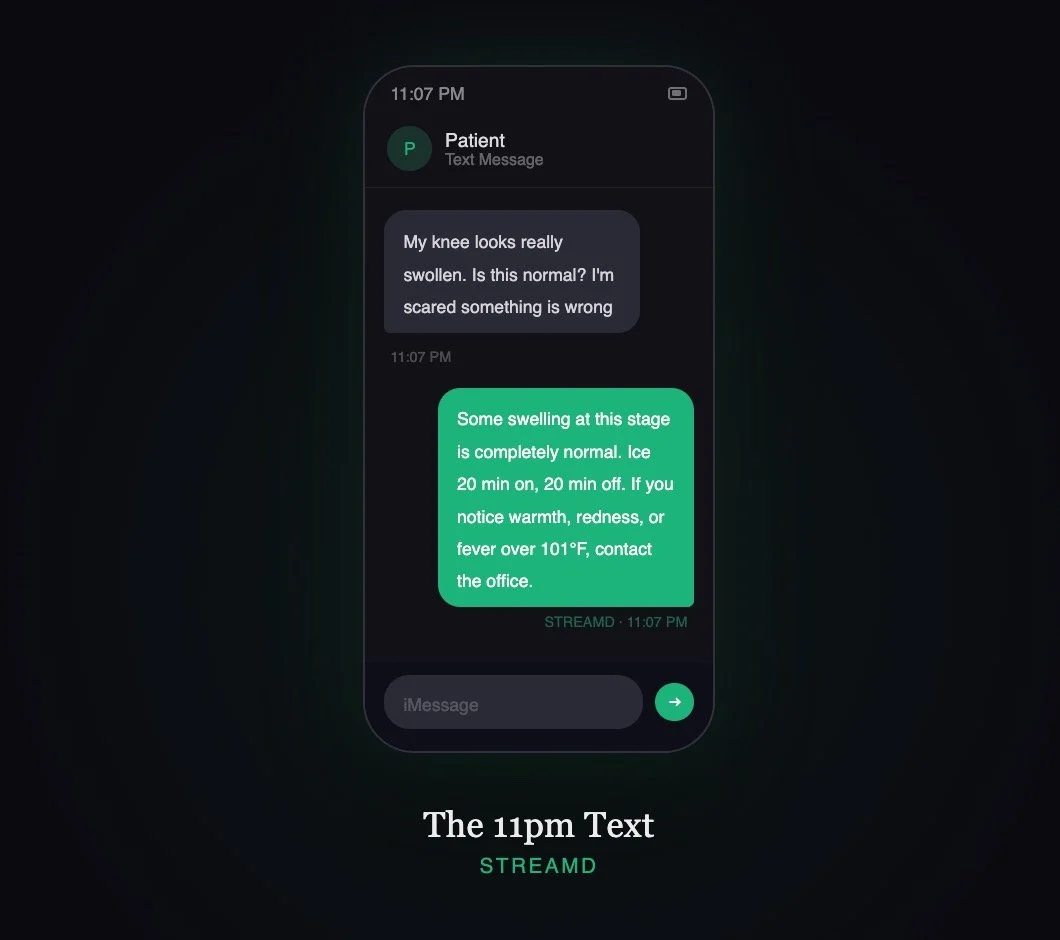
Every surgeon knows the feeling. You're at dinner with your family, or somewhere between awake and asleep, and your phone buzzes. A patient from last week's case. Something about swelling. Or pain. Or a question about the drain. You're not on call. But the message is there, and now so is the guilt.
This is not a staffing problem. It is not a patient education problem. It is a structural problem, and it is quietly driving some of the best surgeons out of the profession.
The math is working against you
The average surgical patient generates 2 to 3 calls to the office in the six weeks following their procedure. Multiply that across a busy practice and you have a phone queue that consumes clinical staff hours, delays responses for patients with genuinely urgent concerns, and creates a background hum of anxiety that follows a surgeon home.
Most of those calls are preventable. Not because the patients are being unreasonable, but because they didn't get the right information at the right moment.
Timing is everything
We have known for decades that patients retain very little of what they are told in a pre-operative appointment. They are nervous, processing logistics, thinking about who will drive them home. The moment a patient actually needs to know whether the swelling they're looking at is normal is not the day before surgery. It is day three post-op, at home, when the swelling appears.
Across thousands of post-surgical interactions, patient questions cluster predictably: wound appearance, pain levels, medication timing, activity restrictions. These are not complex clinical questions. They are anxiety-driven requests for reassurance. A patient who gets an immediate, personalized, protocol-specific response stops worrying and goes back to sleep. The patient who doesn't gets in their car and drives to the emergency department.
The burnout connection
More than half of practicing physicians report symptoms of burnout, and surgeons are among the most affected. One thread runs through nearly all of them: the erosion of boundaries between clinical work and personal life. The after-hours message is a small thing. But small things accumulate.
Technology that handles routine patient communication autonomously, answers the 11pm question with the surgeon's own protocols, and flags only the genuinely concerning messages for clinical attention is not a luxury. It is a structural fix to a structural problem.
The 11pm text is not going away. But it doesn't have to land on your phone.
STREAMD is an AI-powered patient engagement platform built by orthopaedic surgeons for surgical practices. Learn more at www.mystreamd.com.